Brevard County sits on the Atlantic coast in central Florida, which means every exterior paint job here lives at the intersection of three brutal forces: ultraviolet radiation, persistent high humidity, and salt-laden ocean air. Inland homes in Viera or Palm Bay deal with two of them; coastal homes in Satellite Beach, Indialantic, Melbourne Beach, and Cocoa Beach deal with all three at full intensity.
If you've ever wondered why exterior paint on your Brevard home seems to fail faster than it "should," this is why — and here's what to do about it.
The moisture cycle that destroys cheap paint
Brevard County averages 75% relative humidity year-round. Walls absorb atmospheric moisture overnight, then release it as the sun heats them in the morning. This daily moisture cycle creates two failure modes:
- Vapor pressure under the film. If paint can't "breathe" (release vapor), pressure builds and forces the film off the substrate — that's the blistering and peeling you see on south-facing stucco.
- Substrate saturation. Porous stucco that hasn't been properly primed or sealed acts like a sponge. Water finds its way behind the paint and pushes outward.
Premium 100% acrylic paints are vapor permeable — they let moisture escape without compromising weather resistance. Cheap vinyl-acrylic blends aren't, and they trap water until the film fails.
Mildew loves Brevard County
Black streaks on north-facing walls, soffits, and shaded areas? That's mildew, not dirt. Florida's combination of warm temperatures, high humidity, and shade is mildew's preferred climate. Most premium exterior paints include in-can mildewcides that significantly slow growth — most cheap paints don't.
On heavily-shaded walls or homes under large oaks, we'll often add additional mildewcide at the time of mixing for an extra layer of protection.
Salt air: the coastal multiplier
Within roughly one mile of the Atlantic, ocean salt is constantly depositing on surfaces. Salt is hygroscopic — it actively pulls moisture out of the air, even on a dry day. That means coastal homes effectively experience even higher functional humidity than the weather report suggests.
For exteriors in Satellite Beach, Indialantic, Cocoa Beach, Melbourne Beach, and the barrier islands, we modify the standard exterior process:
- Extra pressure wash time with a fresh-water rinse to remove salt residue.
- Inspection of all metal surfaces (railings, shutters, lights, hurricane hardware) for rust.
- Rust-inhibitive primer on any metal that's been exposed.
- Sometimes a third topcoat on west-facing elevations that take both salt spray and afternoon sun.
UV: the slow killer
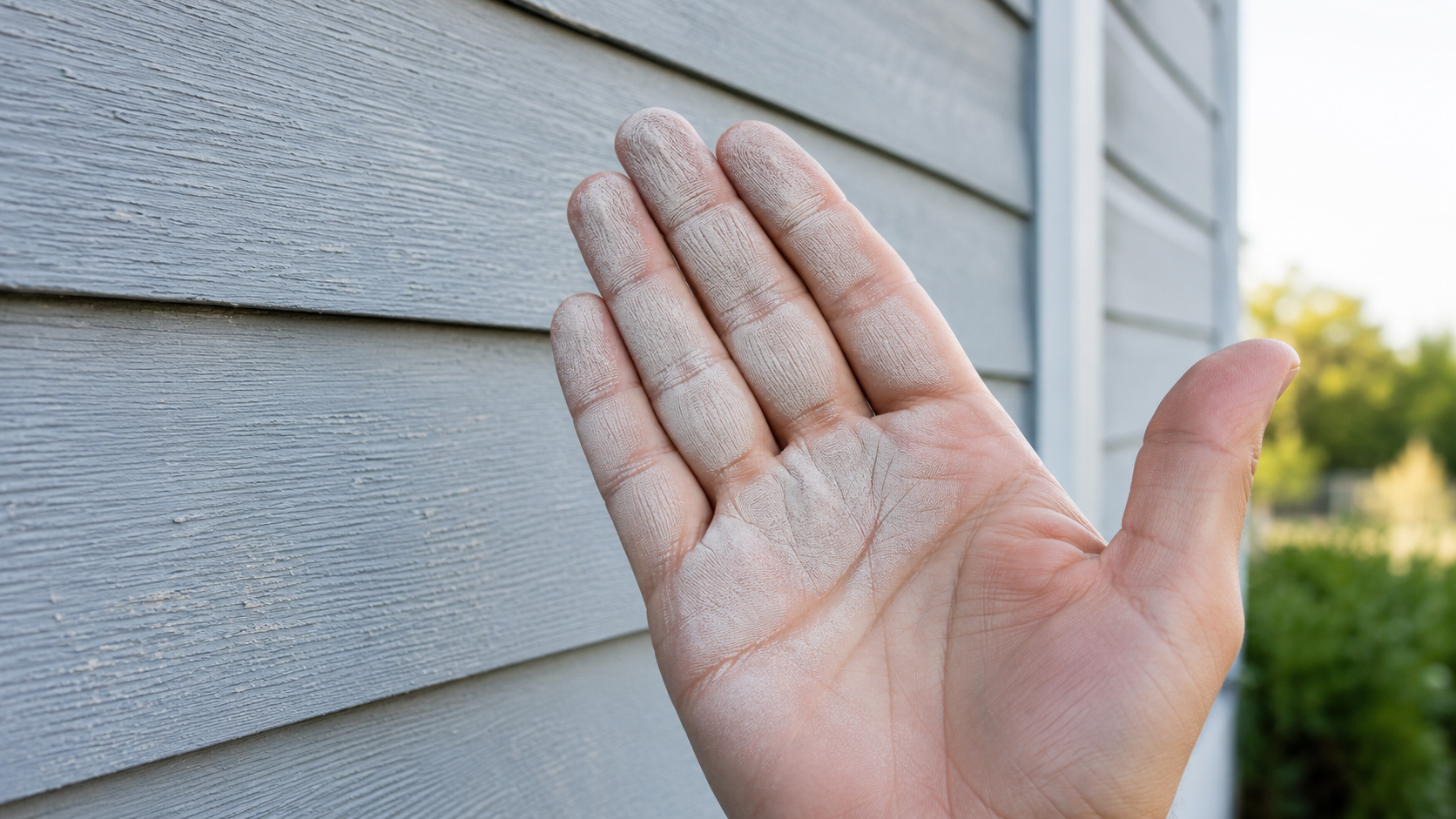
Florida sees roughly 30% more annual UV exposure than the U.S. average. UV breaks down the resin binders that hold pigment to the wall. The visible result is chalking — that white powder you get on your fingers when you rub a faded wall — followed by fading, then film failure.
Darker colors absorb more UV and heat. A dark navy or charcoal on a south-facing Florida wall can reach surface temperatures of 160°F on a summer afternoon. That extreme thermal cycling cracks any paint that isn't highly flexible — which is why premium 100% acrylic systems with high resin flexibility are the only good choice here.
How prep changes for humid climates
Humidity affects when we paint as much as what we paint with. Our standard humidity protocols:
- No painting when surface temp is below dew point. If the wall is colder than the dew point, condensation forms on the surface and ruins adhesion. Morning starts on cool walls are a common failure cause.
- No painting in late afternoon before evening dew. Fresh paint that's flashed but not fully cured can be ruined by dew settling on it.
- Drying time is longer. Manufacturer recoat windows assume 50% humidity. At 75–85%, we extend recoat times to make sure each coat fully sets before the next.
- Surfaces dried before painting. After pressure washing, we wait 24–48 hours (sometimes longer) for stucco to fully dry before priming.
How often do Brevard exteriors actually need repainting?
Realistic Brevard County repaint cycles by exposure:
- Coastal, west-facing, builder-grade paint: 3–5 years.
- Coastal, premium 100% acrylic system, proper prep: 8–12 years.
- Inland (Viera, Suntree, Rockledge, Palm Bay), builder-grade: 5–7 years.
- Inland, premium system with proper prep: 10–15 years.
The premium upgrade roughly doubles your repaint cycle and costs only marginally more upfront — most of the cost is labor and prep, not paint. Read our deep dive on exterior paint choices for more on this.
Warning signs you need exterior paint now
- Chalking — white powder on your hand when you rub the wall.
- Hairline cracks at corners, windows, and joints.
- Bubbling or peeling, especially on south and west elevations.
- Dark streaks or black spots (mildew).
- Color looks washed out compared to areas under awnings or shade.
- Visible substrate (stucco color) showing through faded paint.
Catch any of these early and you save on prep cost. Wait, and you'll be replacing stucco, fascia, or trim along with the repaint.
Want it inspected?
We provide free, written exterior inspections across Brevard County — Melbourne, Viera, Suntree, Indialantic, Melbourne Beach, Satellite Beach, Cocoa Beach, Merritt Island, Rockledge, and Palm Bay. Schedule yours and we'll tell you honestly whether you need a repaint now, in a year, or in three.